
Late Meals Stop Weight Loss
Late isocaloric eating increases hunger, decreases energy expenditure, and modifies metabolic pathways in adults with overweight and obesity
May 26, 2026
|Nutrition & Metabolism
Free AccessAvailable Languages
 English
Abstract
This randomized, controlled, crossover trial investigated the mechanisms by which late eating increases obesity risk. By rigorously controlling for nutrient intake, physical activity, sleep, and light exposure, the study found that late eating significantly increased hunger and altered appetite-regulating hormones, specifically increasing the ghrelin:leptin ratio. Additionally, late eating decreased energy expenditure during wakefulness and lowered 24-hour core body temperature. Adipose tissue analysis revealed that late eating altered gene expression in pathways involved in lipid metabolism, favoring increased adipogenesis and decreased lipolysis. These findings demonstrate that meal timing alone can influence energy balance through converging physiological and molecular mechanisms that promote weight gain.
Late Meals Stop Weight Loss
May 26, 2026
|Nutrition & Metabolism
Free Access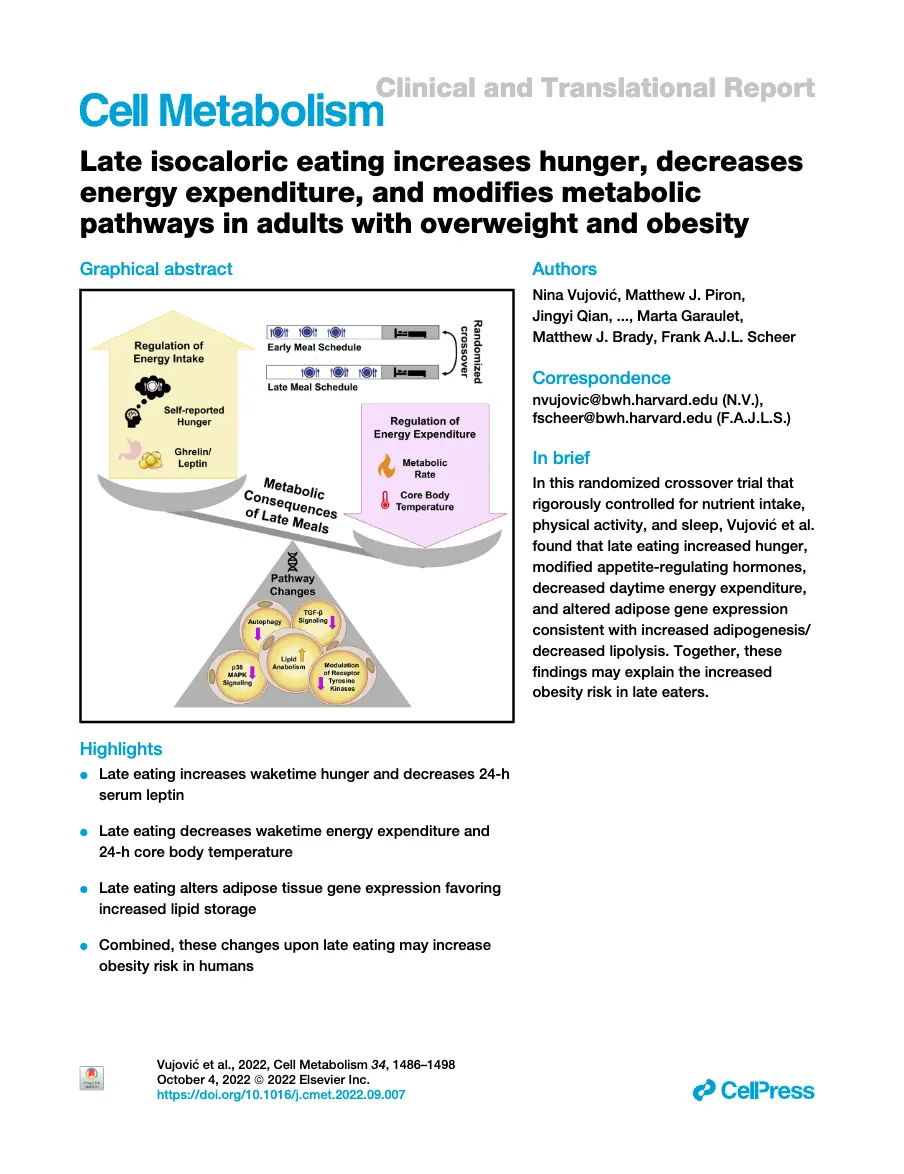
Comments
0 comments
Please sign in to join the peer discussion timeline.
Sign In