
Invisible AI Fingerprint
A Watermark for Large Language Models
August 12, 2026
|arXiv (Cornell University)
Free Access English
 French
 Arabic
Abstract
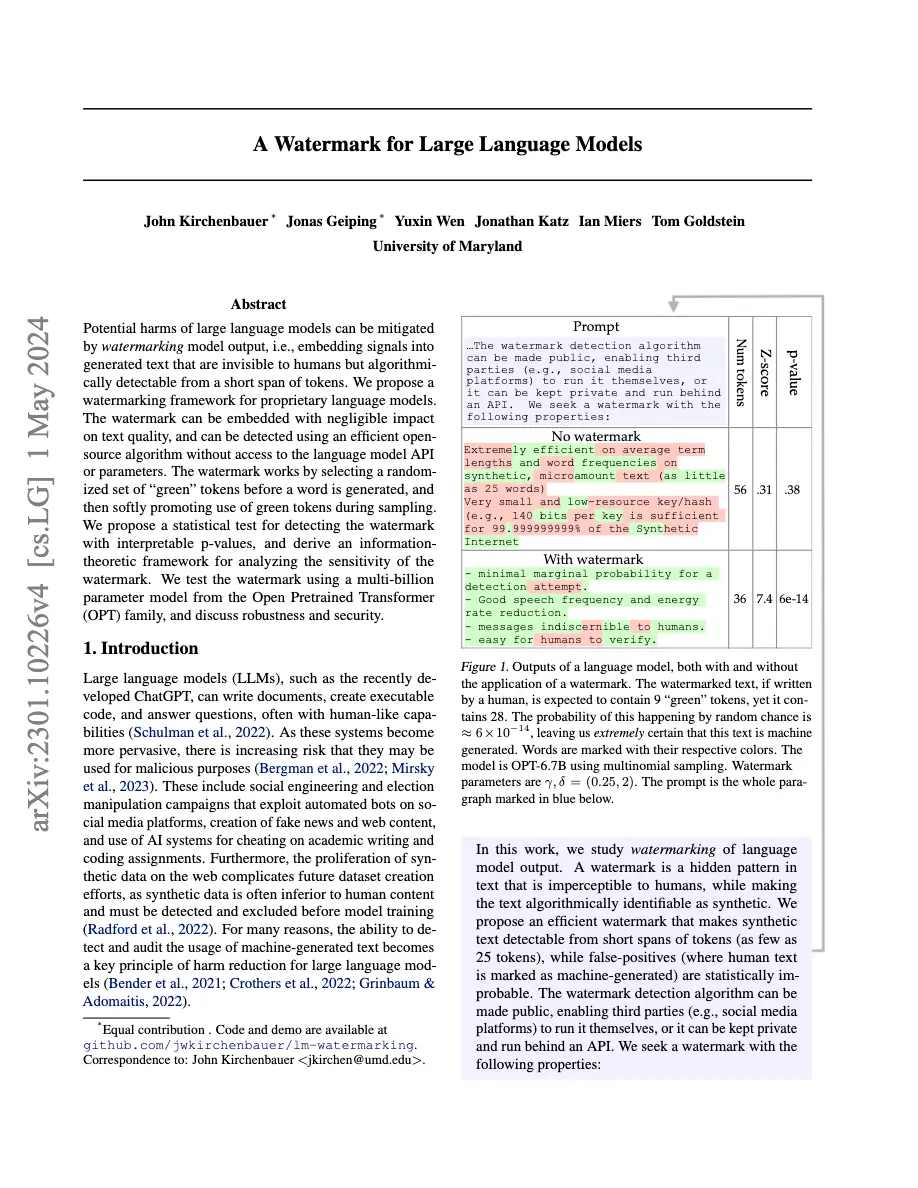
يمكن التخفيف من الأضرار المحتملة للنماذج اللغوية الكبيرة عن طريق وضع علامة مائية على مخرجات النموذج، أي تضمين إشارات في النص الذي تم إنشاؤه تكون غير مرئية للبشر ولكن يمكن اكتشافها خوارزميًا من خلال سلسلة قصيرة من الرموز. نقترح إطار عمل لوضع العلامات المائية للنماذج اللغوية المملوكة للشركات. يمكن تضمين العلامة المائية بأقل تأثير على جودة النص، ويمكن اكتشافها باستخدام خوارزمية مفتوحة المصدر فعالة دون الحاجة إلى الوصول إلى واجهة برمجة تطبيقات النموذج اللغوي أو معلماته. تعمل العلامة المائية عن طريق اختيار مجموعة عشوائية من الرموز "الخضراء" قبل إنشاء الكلمة، ثم الترويج بلطف لاستخدام الرموز الخضراء أثناء عملية أخذ العينات. نقترح اختبارًا إحصائيًا لاكتشاف العلامة المائية بقيم p-value قابلة للتفسير، ونشتق إطار عمل معلوماتي نظري لتحليل حساسية العلامة المائية. نختبر العلامة المائية باستخدام نموذج ذي مليارات المعلمات من عائلة المحولات المسبقة التدريب المفتوحة (OPT)، ونناقش القوة والأمان.
Comments
2 comments
Please sign in to join the peer discussion timeline.
Sign Intotally get the high-entropy bit, like, for llms it feels super relevant right? trying to figure out how this *formally* maps to existing cs concepts beyond just 'more choices' is kinda wild tho, especially for things like search or planning.
yeah, i totally agree with the emphasis on clear communication. so much brilliant cs research gets lost in super dense papers, right? if we're better at translating that into understandable narratives, it could seriously boost interdisciplinary collaborations and public understanding. imagine if everyone could grasp the core ideas behind, say, quantum computing or really complex algos w/o needing a phd. that’d be huge for adoption and future breakthroughs. makes me wonder about the tools they use for this translation process, tbh.